Performance Scientist Tampa Bay Rays Welsey Chapel, Florida, United States
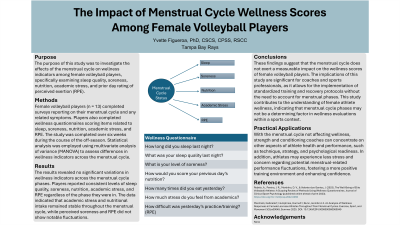
Purpose: The purpose of this study was to investigate the effects of the menstrual cycle on wellness indicators among female volleyball players, specifically examining sleep quality, soreness, nutrition, academic stress, and prior day rating of perceived exertion (RPE). Methods: Female volleyball players (n = 13) completed surveys reporting on their menstrual cycle and any related symptoms. Players also completed wellness questionnaires scoring items related to sleep, soreness, nutrition, academic stress, and RPE. The study was completed over six weeks during the course of the off-season. Statistical analysis was employed using multivariate analysis of variance (MANOVA) to assess differences in wellness indicators across the menstrual cycle. Results: The results revealed no significant variations in wellness indicators across the menstrual cycle phases. Players reported consistent levels of sleep quality, soreness, nutrition, academic stress, and RPE regardless of the phase they were in. The data indicated that academic stress and nutritional intake remained stable throughout the menstrual cycle, while perceived soreness and RPE did not show notable fluctuations. Conclusions: These findings suggest that the menstrual cycle does not exert a measurable impact on the wellness scores of female volleyball players. The implications of this study are significant for coaches and sports professionals, as it allows for the implementation of standardized training and recovery protocols without the need to account for menstrual phases. This study contributes to the understanding of female athlete wellness, indicating that menstrual cycle phases may not be a determining factor in wellness evaluations within a sports context. Practical Applications: With the menstrual cycle not affecting wellness, strength and conditioning coaches can concentrate on other aspects of athlete health and performance, such as technique, strategy, and psychological readiness. In addition, athletes may experience less stress and concern regarding potential menstrual-related performance fluctuations, fostering a more positive training environment and enhancing confidence. Acknowledgements: None